Artificial plants offer a practical way to add greenery to homes, offices, balconies and commerciHowever, one important question often arises before they are placed near a window or outdoors: do artificial plants fade in the sun?
Yes, artificial plants can fade when they receive prolonged exposure to sunlight. The speed and severity of the fading depend on the plant’s material, colour quality, UV protection, location and surrounding weather conditions.
Understanding how sunlight affects synthetic foliage can help homeowners, designers and business owners select suitable products and protect them from premature discolouration.
Why Do Artificial Plants Fade in the Sun?
Artificial plants are commonly produced using plastic, polyester, synthetic fabric, foam, metal wire and colour pigments. Although these materials do not wilt like natural plants, they can still deteriorate when exposed to sunlight for extended periods.
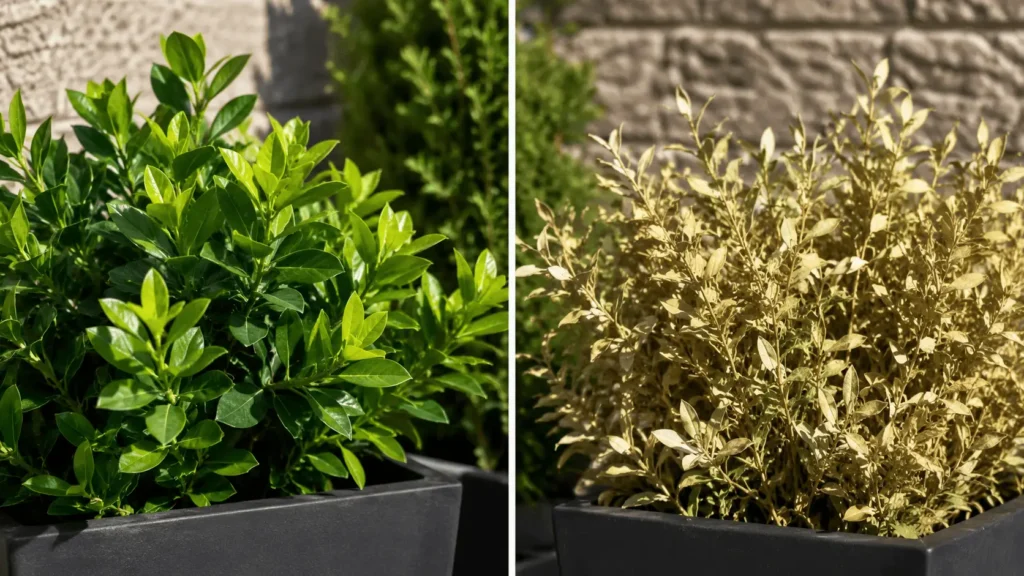
Ultraviolet radiation gradually affects the pigments that give artificial leaves and flowers their colour. It can also weaken some types of plastic and fabric. As the materials begin to deteriorate, the plant may lose its original green tone, become unevenly coloured or develop a dry texture.
Sun damage does not always appear immediately. It usually develops slowly, beginning on the side of the plant that receives the greatest amount of light.
Common effects of continued sun exposure include:
- Green leaves becoming pale, yellow or grey
- Flowers losing their original colour intensity
- Foliage developing an unnatural blue or purple shade
- Plastic leaves becoming hard or brittle
- Fabric petals becoming thin or dry
- Surface coatings beginning to crack or peel
- One side of the arrangement fading faster than the other
Heat can make the problem worse. An artificial plant placed behind a hot window or against a sun-facing wall may experience both strong ultraviolet exposure and elevated temperatures.
Do All Artificial Plants Fade at the Same Speed?
Not every artificial plant responds to sunlight in the same way. Product quality, materials and manufacturing methods can create significant differences in performance.
An inexpensive indoor faux plant may begin losing colour relatively quickly when placed on an exposed balcony. A properly manufactured outdoor artificial plant with UV-stabilised materials may continue looking realistic for several seasons under the same conditions.
The main categories include the following.
Indoor Artificial Plants
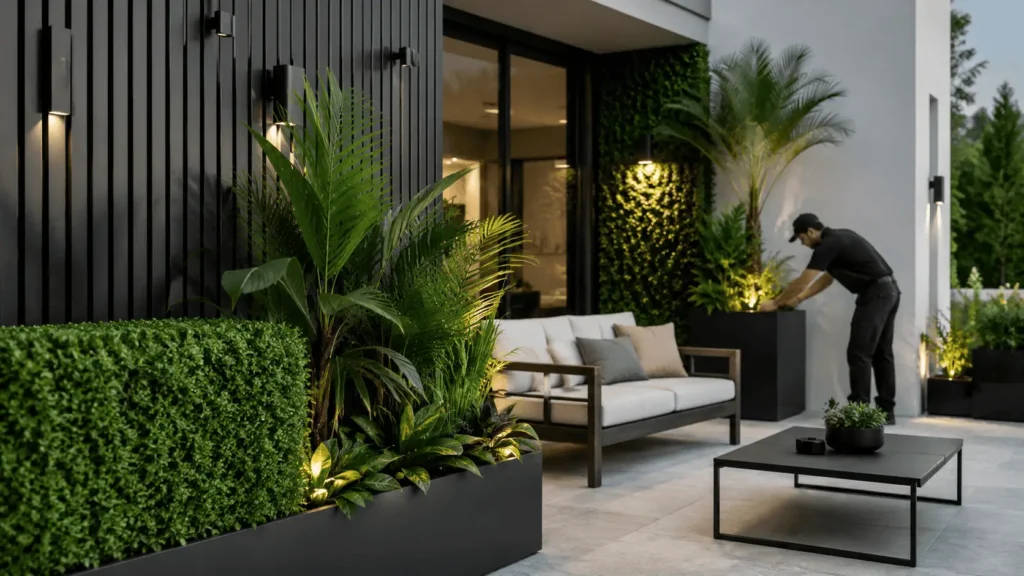
Indoor plants are primarily designed for sheltered rooms with controlled temperatures. Their colours and materials may not contain protection against outdoor sunlight, rain or temperature changes.
They are generally suitable for living rooms, bedrooms, offices, restaurants and shaded interior spaces. They should not be treated as permanent outdoor decorations unless the manufacturer specifically approves exterior use.
Untreated Plastic Plants
Plastic itself does not guarantee protection against fading. Untreated plastic foliage may resist moisture, but its pigments and surface can still deteriorate in direct sunlight.
These plants may perform acceptably in deep shade or covered areas but are less suitable for exposed patios, rooftops and gardens.
Surface-Treated Artificial Plants
Some faux plants receive a UV-protective coating after production. This surface layer can slow colour loss, but its effectiveness depends on how evenly it was applied and how well it withstands weather.
A surface treatment may gradually wear away through cleaning, rain, wind and repeated handling.
UV-Stabilised Artificial Plants
Higher-quality outdoor artificial plants often have UV stabilisers incorporated into their materials during manufacturing. This provides protection throughout the foliage rather than only on its surface.
UV-stabilised plants are normally a stronger choice for balconies, outdoor entrances, gardens, pool areas and commercial exterior displays. However, UV stabilisation reduces damage rather than eliminating it completely.
UV-Resistant and Weather-Resistant Are Not the Same
One common purchasing mistake is assuming that a weather-resistant artificial plant is automatically protected from sunlight.
Weather resistance may indicate that the product can tolerate moisture, light rain or changing temperatures. UV resistance specifically relates to the plant’s ability to withstand ultraviolet exposure.
A product may therefore resist rain while still fading in direct sun.
For exterior use, buyers should look for descriptions that clearly mention:
- UV resistance
- UV stabilisation
- Outdoor suitability
- Fade resistance
- Full-sun or partial-sun use
- Weather testing
- Protection against cracking or discolouration
A vague “outdoor suitable” label does not provide the same level of information as a clearly stated UV rating or manufacturer-backed fading warranty.
Can Indoor Artificial Plants Be Placed Outside?
Indoor artificial plants can be used outside for short periods, such as during an event, seasonal display or photoshoot. Permanent outdoor placement is usually not recommended.
Indoor plants may be vulnerable to more than fading. Rain can damage fabric petals, moisture can affect internal wires, and strong wind can loosen leaves or overturn lightweight containers.
A deeply covered porch or shaded entrance may offer enough protection for limited use. Even then, reflected light and bright indirect sunlight can gradually change the foliage.
For a permanent installation, purpose-made outdoor artificial plants are usually more economical because they require less frequent replacement.
How Long Do Artificial Plants Last Outside?
There is no single lifespan that applies to every artificial plant. Performance depends on the product and the environment in which it is installed.
A plant placed beneath a covered patio may last considerably longer than an identical plant positioned in direct afternoon sun. Similarly, an outdoor display in a mild climate may age differently from one exposed to intense heat, frost, coastal air or frequent storms.
The lifespan of outdoor artificial plants is influenced by:
- Daily hours of direct sunlight
- Strength of local UV exposure
- Quality of plastic, fabric and pigments
- Type of UV protection
- Rain, wind, humidity and temperature
- Reflected heat from walls, glass and paving
- Cleaning methods
- Frequency of rotation or relocation
- Manufacturer quality and warranty terms
Claims that an artificial plant will last a particular number of years should be considered estimates rather than guarantees. Exposure conditions can vary significantly from one property to another.
How to Keep Artificial Plants From Fading Outside
Although fading cannot always be prevented permanently, several practical steps can extend the appearance and useful life of artificial greenery.
Select Plants Designed for Outdoor Use
Protection begins with product selection. Buyers should choose artificial plants that clearly state they are suitable for exterior locations and contain UV-resistant or UV-stabilised materials.
The product information should ideally explain whether UV protection is built into the material or applied as a surface coating.
Avoid the Strongest Afternoon Sun
The hottest afternoon sunlight usually places more stress on synthetic materials than gentle morning light.
Where possible, artificial plants should be positioned beneath an awning, balcony, pergola or roof overhang. Partial shade can considerably reduce the amount of direct exposure the foliage receives.
West-facing walls, reflective windows, pale paving and swimming pools may increase the amount of heat and reflected light reaching a plant.
Rotate Potted Artificial Plants
A potted artificial tree or shrub often fades unevenly because the same side remains exposed to sunlight every day.
Rotating the container periodically helps distribute the exposure. It does not completely prevent fading, but it can stop one side from looking noticeably lighter than the other.
Rotation is particularly useful for artificial topiary trees, palms, shrubs and flowering arrangements in moveable pots.
Use a Suitable UV-Protective Spray
A UV-protective spray may provide additional protection for certain artificial plants. It can be useful when a plant has limited built-in protection or is being moved from an indoor area to a sheltered exterior location.
However, not every spray is compatible with every material. Some products can create a shiny, sticky or uneven finish.
The spray should first be tested on a hidden leaf. The foliage should also be clean and dry before treatment, and all application instructions should be followed carefully.
Clean the Foliage Regularly
Dust, pollution, pollen and outdoor residue can make artificial plants look faded even when their pigments remain in reasonable condition.
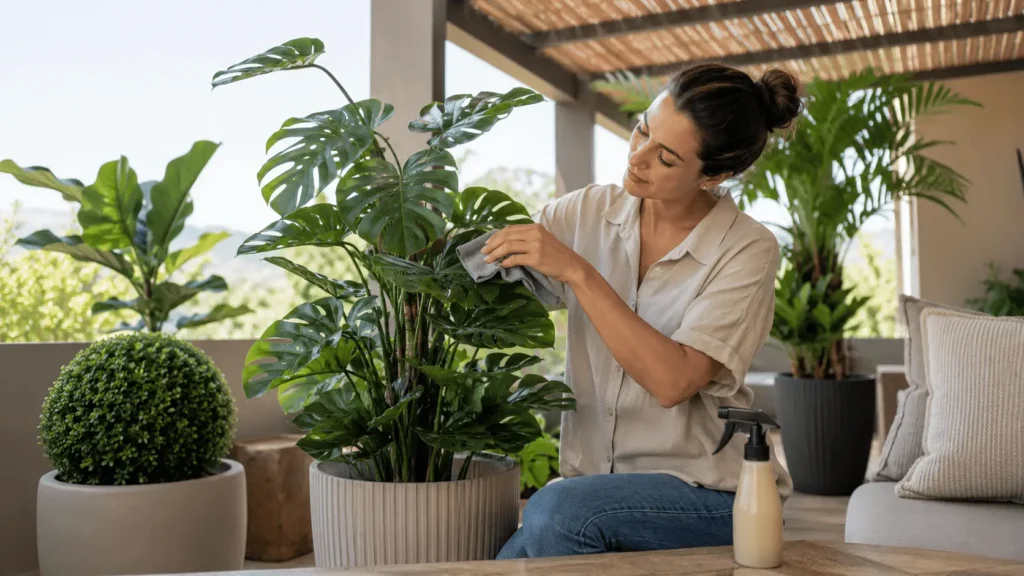
Durable plastic foliage can usually be cleaned with a soft cloth, cool water and a small amount of mild soap. Aggressive chemicals, rough brushes and high-pressure water should be avoided because they may damage the colour or protective surface.
Fabric flowers may require dry cleaning with a soft brush or low-pressure air rather than washing.
Move Plants During Extreme Weather
Sunlight is not the only condition that affects artificial plants. Strong winds may bend stems or detach leaves, while freezing temperatures can make some plastics more fragile.
Moveable arrangements should be placed under cover during storms, extreme heat or freezing weather. Large outdoor planters should be weighted securely so they do not fall over.
Do Artificial Plants Fade Through Windows?
Artificial plants can fade through windows, particularly when they are placed directly beside bright glass for long periods.
Windows may reduce some ultraviolet exposure, but they do not necessarily block all of it. Heat can also build up near sun-facing glass, placing additional stress on plastic foliage and coloured fabrics.
Artificial plants near large windows, skylights and conservatories should be monitored for uneven colour changes. Sheer curtains, blinds or greater distance from the window can help reduce exposure.
Does Indirect Sunlight Fade Fake Plants?
Indirect sunlight is usually less damaging than continuous direct sun, but it can still cause gradual fading.
Bright rooms, glass-enclosed balconies, sunrooms and covered patios may receive strong reflected or filtered light throughout the day. An indoor artificial plant placed in these environments can eventually lose colour, even when sunlight does not fall directly on its leaves.
UV-resistant artificial plants are therefore useful not only outdoors but also in unusually bright indoor spaces.
Signs That an Artificial Plant Has Sun Damage
Early sun damage can sometimes be difficult to separate from ordinary dust. The plant should first be cleaned gently and then inspected in natural light.
Likely signs of UV-related deterioration include:
- Permanent colour differences after cleaning
- Noticeably lighter leaves on one side
- Yellow, blue, grey or purple discolouration
- Brittle or stiff leaf edges
- Cracks around folds and attachment points
- Faded flowers with uneven colour
- Chalky or rough plastic surfaces
- Leaves breaking during normal handling
Once pigments have been permanently damaged by sunlight, cleaning will not restore the original colour. Individual stems may sometimes be replaced, but severely faded arrangements generally require replacement.
How to Choose Artificial Plants for Sunny Areas
Before purchasing faux greenery for a bright or exposed location, buyers should evaluate more than appearance and price.
Useful questions include:
- Is the plant approved for outdoor use?
- Does it include UV stabilisation or only a temporary coating?
- Is it suitable for direct sun, partial sun or covered shade?
- Has the product been tested for fading?
- Does the warranty cover discolouration or cracking?
- Are the planter, stems and internal frame weather-resistant?
- Can damaged leaves or individual branches be replaced?
- Are maintenance instructions provided?
Realistic colour variation can also help an artificial plant age more naturally. Foliage that contains several shades of green may show minor colour changes less obviously than leaves with one flat, glossy shade.
Are UV-Resistant Artificial Plants Fade-Proof?
UV-resistant artificial plants are not completely fade-proof.
The term means that the materials are designed to slow damage caused by ultraviolet exposure. It does not mean the plant will maintain the same colour forever under every weather condition.
A high-quality UV-resistant plant can remain attractive considerably longer than untreated foliage. Its actual performance still depends on sun intensity, location, climate and maintenance.
Buyers should be cautious of absolute claims such as “will never fade.” Clear product specifications and realistic warranty terms are more reliable indicators of quality.
Do Artificial Plants Fade in the Sun? Conclusion
Artificial plants do fade in the sun when their pigments and materials receive prolonged ultraviolet exposure. Indoor faux plants, untreated plastic foliage and delicate fabric flowers generally face the greatest risk.
Outdoor artificial plants made with UV-stabilised materials provide better resistance, but they are still affected by their environment over time. The most effective approach is to choose greenery intended for outdoor use, verify its UV protection, reduce intense afternoon exposure, rotate moveable pots and clean the foliage carefully. These measures can help artificial plants maintain a natural colour and realistic texture for much longer.
For reliable, long-lasting artificial greenery, Al Saqir Plants supplies premium fade-resistant artificial plants for indoor and outdoor spaces. The company also provides professional supply, installation and maintenance services to help homes, offices and commercial properties maintain a fresh, realistic green appearance throughout the year.
Frequently Asked Questions
How quickly do artificial plants fade outside?
The fading rate depends on product quality, UV protection, local climate and daily sun exposure. Untreated indoor plants may fade relatively quickly, while UV-stabilised outdoor plants usually perform much longer.
Can faded artificial plants be restored?
Dust-related dullness can be cleaned, but permanent pigment loss cannot normally be reversed. Minor areas may be touched up, although replacing damaged stems often produces a more realistic result.
Do artificial flowers fade faster than artificial leaves?
Artificial flowers may fade faster when they are made from thin polyester or fabric. Moulded plastic foliage is often more durable, although its performance still depends on UV protection and manufacturing quality.
Can hairspray stop artificial plants from fading?
Hairspray is not designed to protect synthetic foliage from ultraviolet radiation. It may leave a sticky coating that attracts dust. A compatible UV-protective spray is a more suitable option.
Can artificial plants stay outside in winter?
Weather-resistant artificial plants may remain outdoors during mild winters. Products containing delicate fabrics, untreated wires or brittle plastics may require protection from frost, snow and strong winds.